
Reading is the Ultimate Time Arbitrage
Why the Smartest People in the World Still Read Books
Philip Te
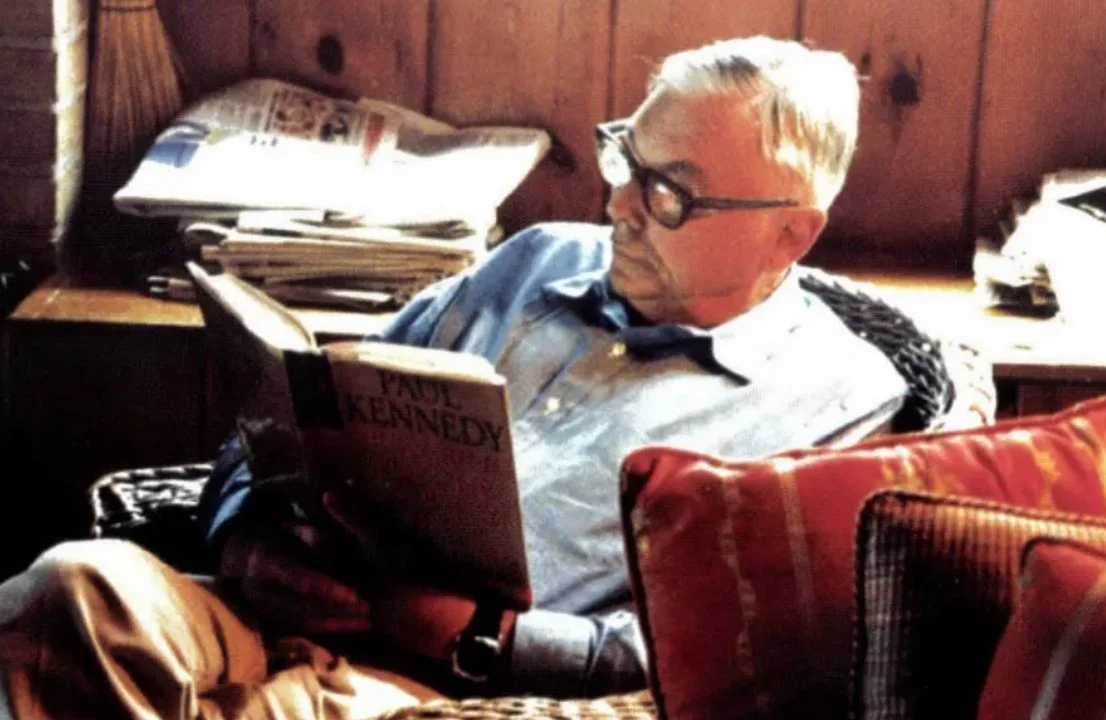
Charlie Munger reading Paul Kennedy’s book the Rise and Fall of Great Powers
I work in a financial markets dealing room. I have spent most of my career on trading floors where the culture is fast, the focus is short-term, and very few people read books.
Early in my career, I asked a manager if he had any books to recommend. He paused for a long time. I waited, expecting gems. Finally, he said: “I don’t read books. I don’t see any value in reading books. The internet is my library.”
When I moved to another dealing room, my next boss would constantly ask why I read books when everything was already accessible on Wikipedia.
These were not lazy people. They were sharp, successful professionals operating at a high level. Their questions were honest, and they deserved an honest answer. Why books? There are faster, less painful ways to acquire information. Was I being a Luddite, stubbornly clinging to an old medium?
It took me years to arrive at the answer. And when I finally did, it changed how I spend my time, how I raise my children, and how I think about what it means to learn.
The answer is this: reading books is the most effective time arbitrage available to any human being.
What Arbitrage Actually Means
In financial markets, arbitrage refers to a temporary mispricing that you can exploit. The textbook example is buying low in one market and selling high in another, capturing the difference before the gap closes. In practice, true arbitrage is rare and fleeting. But the concept is powerful.
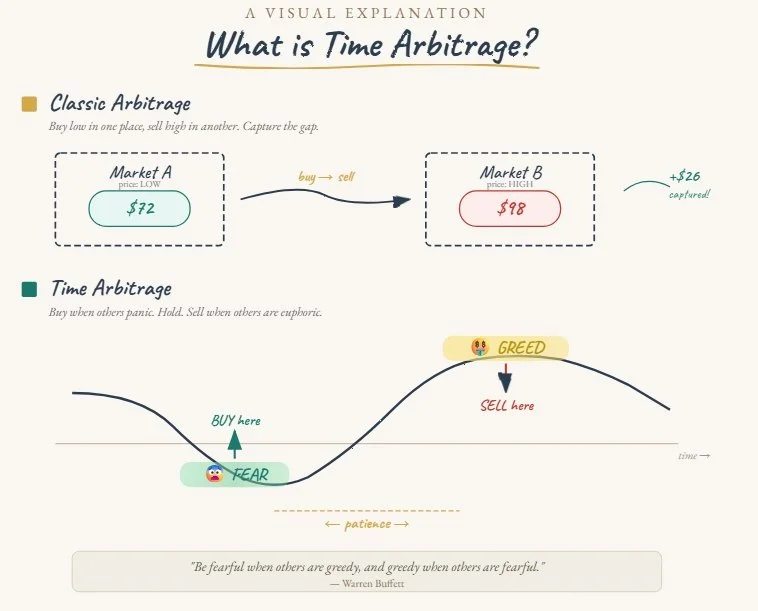
Value investors—the tradition that runs from Benjamin Graham through Warren Buffett—practise a different kind of arbitrage: time arbitrage. They buy when there is temporary madness, hold patiently, and sell when there is temporary exuberance. They recognise that markets are feeble in the short run and rational in the long run. The discipline is to act on a longer time horizon than everyone around you.
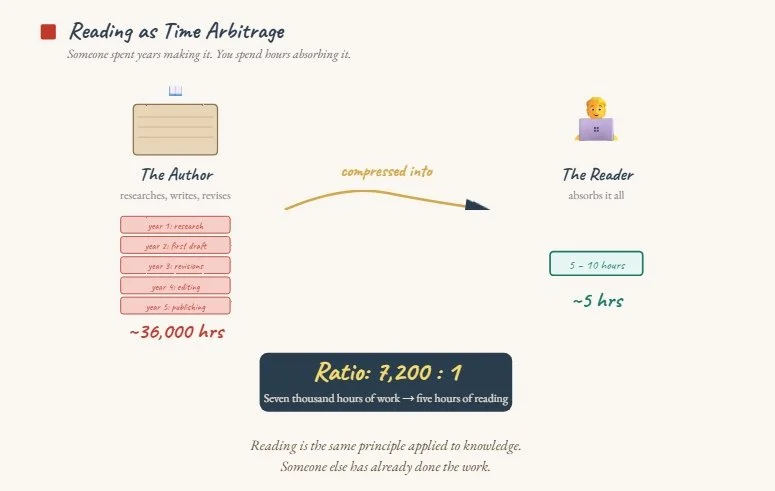
Reading books is the same principle applied to knowledge. Someone else has already done the work. You are capturing the difference between the time they invested and the time you spend.
The Mathematics of Reading
Steven Kotler, the bestselling author and journalist, laid out this calculation in his book The Art of the Impossible, and I have found no better way to frame it. The numbers are striking when you see them side by side.
Start with a blog post. The average post is about 800 words. At a normal adult reading speed of 250 words per minute, you finish it in roughly three and a half minutes. But the writer typically spent three full days producing it—a day and a half of research, a day and a half of writing. That is approximately 1,440 minutes of work distilled into three and a half minutes of reading. The ratio is about 400 to 1. Not bad.
Now consider a long-form magazine article. A serious piece runs about 5,000 words. You read it in twenty minutes. The writer, however, typically spent a month researching, six weeks reporting, and six weeks writing and editing—roughly four months of concentrated brainpower. The ratio jumps to about 1,900 to 1. More than four times better than a blog post.
This, incidentally, is why Warren Buffett and Charlie Munger have always recommended reading newspapers and quality magazines. The investment of time by journalists and researchers is enormous. The return to the careful reader is disproportionate.
“By regularly reading business newspapers and magazines, I am exposed to an enormous amount of material at the micro level. I find that what I see going on there pretty much informs me about what’s happening at the macro level.”
— Charlie Munger
But books are where the ratio becomes almost absurd.
The average nonfiction book runs about 75,000 words. A diligent reader finishes it in five to ten hours. But the author may have spent years—sometimes decades—producing it. Kotler himself spent fifteen years writing The Rise of Superman. If you estimate 2,400 working hours per year over fifteen years, that is 36,000 hours compressed into your five hours of reading. The ratio is 7,200 to 1.
Seven thousand two hundred hours of someone else’s work, transferred to you in the time it takes to read before bed for a week.
Having written two volumes published by Oxford University Press, I know the effort personally. The research, the drafts, the revisions, the fact-checking—the sheer intellectual energy required to produce a book that meets a serious publisher’s standard is staggering. When I hold someone else’s book in my hands now, I feel the weight of it differently. Not the physical weight. The weight of the hours.
What the Superinvestors Already Know
It comes as no surprise that the greatest investors of our time are also the most voracious readers. When you understand the mathematics of reading, their habits make perfect sense. There is simply no better use of time.
“In my whole life, I have known no wise people—over a broad subject matter area—who didn’t read all the time. None. Zero.”
— Charlie Munger
Alice Schroeder, Warren Buffett’s biographer, was struck by how closely the public Buffett resembles the private one. The man you do not see spends most of his time doing two things: reading and thinking.
“I still probably spend five or six hours a day reading. I like to sit and think. I spend a lot of time doing that, and sometimes it is pretty unproductive, but I find it enjoyable to think about business or investment problems.”
— Warren Buffett
Buffett reads six newspapers every day: the Wall Street Journal, Financial Times, New York Times, USA Today, the Omaha World-Herald, and the American Banker. Munger reads the Wall Street Journal, New York Times, Financial Times, and Los Angeles Times daily, plus the Economist weekly.
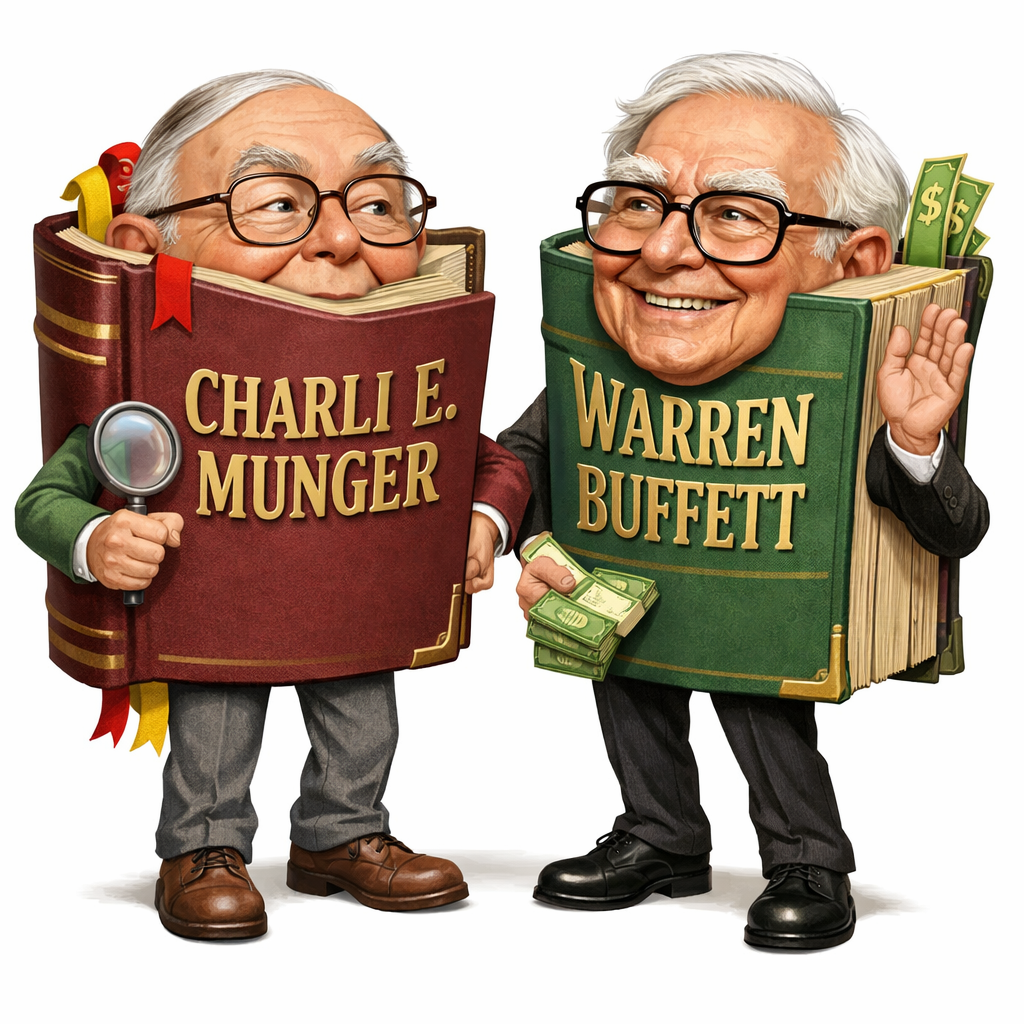
But the story I love most comes from Li Lu, one of Munger’s closest associates. Li Lu arranged to meet Charlie for breakfast at 7:30 in the morning. He arrived on time and found Charlie already seated, having finished the day’s newspapers. Li Lu felt bad for making an older man wait. So for their next meeting, he arrived fifteen minutes early. Charlie was already there, reading. For the third meeting, Li Lu came thirty minutes early. Charlie was still there, reading, as if he had been sitting in that seat all year and had never left.
Li Lu came to understand something simple: Charlie always arrives early. But he never wastes time, because he always brings something to read.
There is a quiet lesson here that has nothing to do with investing. It is about how a person chooses to spend the minutes that most people throw away.
The Man Who Spent His Life on One Subject
If you want to understand the full power of reading as time arbitrage, consider Robert Caro.
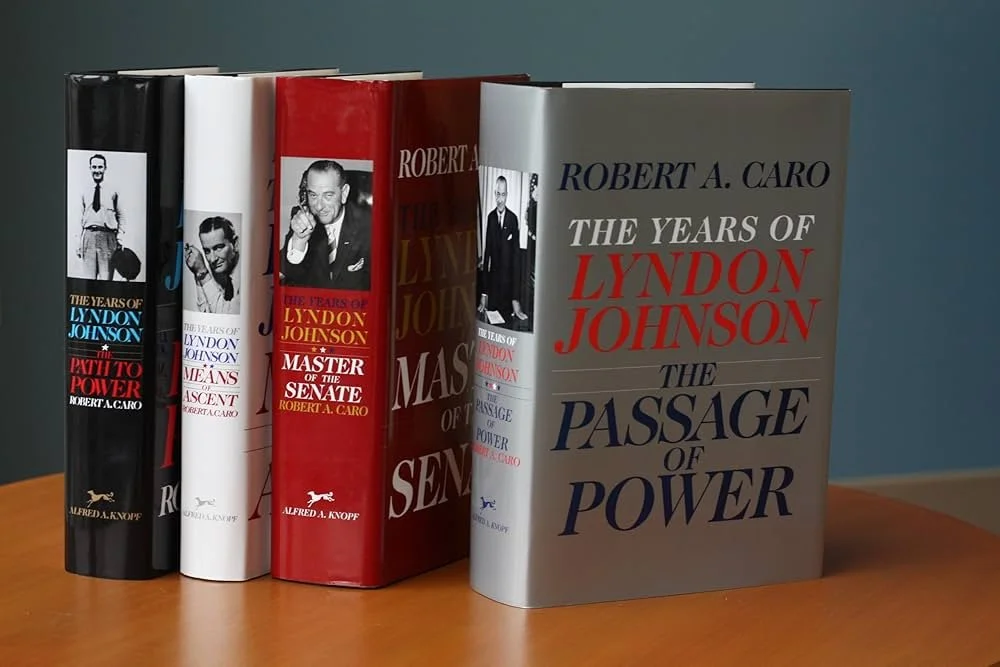
Caro is the Pulitzer Prize-winning author of The Power Broker, the definitive biography of Robert Moses, and the still-unfinished multi-volume biography of Lyndon Johnson. He has spent nearly fifty years writing about power—how it is acquired, wielded, and lost.
His research is exhaustive to the point of obsession. He relocated his family to Texas to understand the landscape of Johnson’s youth. He tracked down the average rainfall in the Hill Country, not because anyone asked, but because he believed you cannot write truthfully about a place until you have lived its weather. He examined every document. He interviewed hundreds of people, some of them multiple times over decades. He writes three to four drafts in longhand.
His wife, Ina, is his only research associate. She is a talented academic and writer in her own right, and she has devoted most of her professional life to helping her husband produce these books.
Between them, the Caros have poured what amounts to two lifetimes into understanding the nature of power in America.
You can read the entire Lyndon Johnson series in about 250 hours. Less than an hour a day for a year. When you count the decades the Caros invested—the research, the writing, the interviews, the drafts—the ratio is almost beyond calculation.
That is the gift a great author gives you. They spend their life so that you can spend a few hours.
What Reading Actually Does
But I want to be honest about something. The mathematics of reading, as compelling as they are, do not capture the full picture. The ratio of hours is a useful argument for the sceptic on the trading floor. It answers the question “why books?” in a language that financial professionals understand.
The deeper answer is harder to quantify.
Books do not just make you smarter. They make you different. And that difference—accumulated over years, compounded across hundreds of books—is what separates those who merely know things from those who have been changed by what they know.
“The more hard lessons you can learn vicariously rather than through your own hard experience, the better.”
— Charlie Munger
Vicarious learning is what reading offers at scale. When you read a biography, you live a life you will never live. When you read history, you stand at decisions you will never face. When you read psychology, you see yourself from angles you could not have discovered alone. When you read theology, you confront questions that your daily routine would never surface.
I think about this often as a father. My son and my daughter will face a world I cannot predict. I cannot give them answers to questions that have not yet been asked. But I can give them the habit of reading—and with it, access to thousands of lifetimes of accumulated wisdom.
That is not a metaphor. It is the closest thing to a superpower that an ordinary person can acquire.
A Note for My Children
If you are reading this years from now, here is what I want you to understand.
Your father is not genetically gifted. I was not the smartest person in any room I entered. I did not come from wealth or connections. What I had—what anyone can have—is the willingness to sit down with a book and let someone who spent years thinking about a problem teach me what they learned.
Every good decision I have made was informed by something I read. The career moves, the health transformation, the faith that rewired how I think about everything—all of it traces back, in some way, to a book that arrived at the right time.
Reading is the only way to live more than one life. It is the only way to learn from people you will never meet, in places you will never visit, in eras you will never inhabit. It is the only technology that has never become obsolete in five thousand years of human civilisation.
We all have finite time. The question is not whether you are busy. Everyone is busy. The question is whether you are investing your time or spending it.
Reading is an investment. Every hour you give to a good book returns more than it cost.
Read. Not because someone told you to. Because there is no better use of the time you have.
Philip Te writes at the intersection of faith, leadership, and building for the long term. Second Foundation is his body of work in progress—built weekly, one essay at a time.
Journal Prompt:
If you could only read five books for the rest of your life, which five would you choose — and what does that list reveal about what you actually value?