
Building for 30 Years, Not 30 Days: What I Learned From Singapore’s “Yoda of Civil Service”
Executive Summary
Here’s what I figured out on Valentine’s Day 2026.
Most leaders are optimizing for the wrong timeline. Quarterly results. Annual targets. Five-year plans if they’re thinking long-term.
Most leaders are building sandcastles. They benchmark against last year. They copy what worked yesterday and call it strategy.
This is why empires fail within 250 years. All of them. Despite technology, wealth, and brilliant people.
I spent Valentine’s Day 2026 with Singapore’s “Yoda of Civil Service” — Mr. Lim Siong Guan, former Permanent Secretary to Lee Kuan Yew, former EDB Chairman, and GIC President. He showed me why Singapore has 190 years left on the empire clock. And what we must do to beat history.
The framework is deceptively simple:
Long-term Clarity × Culture for Winning = Survival
Without both, you’re managing decline. With both, you can navigate any unknown.
Here’s what that means in practice.
Long-term clarity isn’t vision statements or strategic plans. It’s answering one question: What do I want to exist in 30 years that doesn’t exist today?
Culture for winning isn’t values posters. It’s the beliefs and behaviors that compound over generations.
Without both, you’re managing decline. You might do it well. You might extend the runway. But you’re still declining.
With both, you build institutions that strengthen under stress (antifragile).
The shift happened for me mid-workshop. I stopped asking “What do I want to achieve this year?” and started asking “What do I want my grandchildren to inherit?”
That question changes everything. Your hiring. Your capital allocation. How you raise your children. What you say no to.
At 40, I am dreaming bigger dreams for Singapore. I am building institutions that outlast me.
Here’s what changed my thinking:
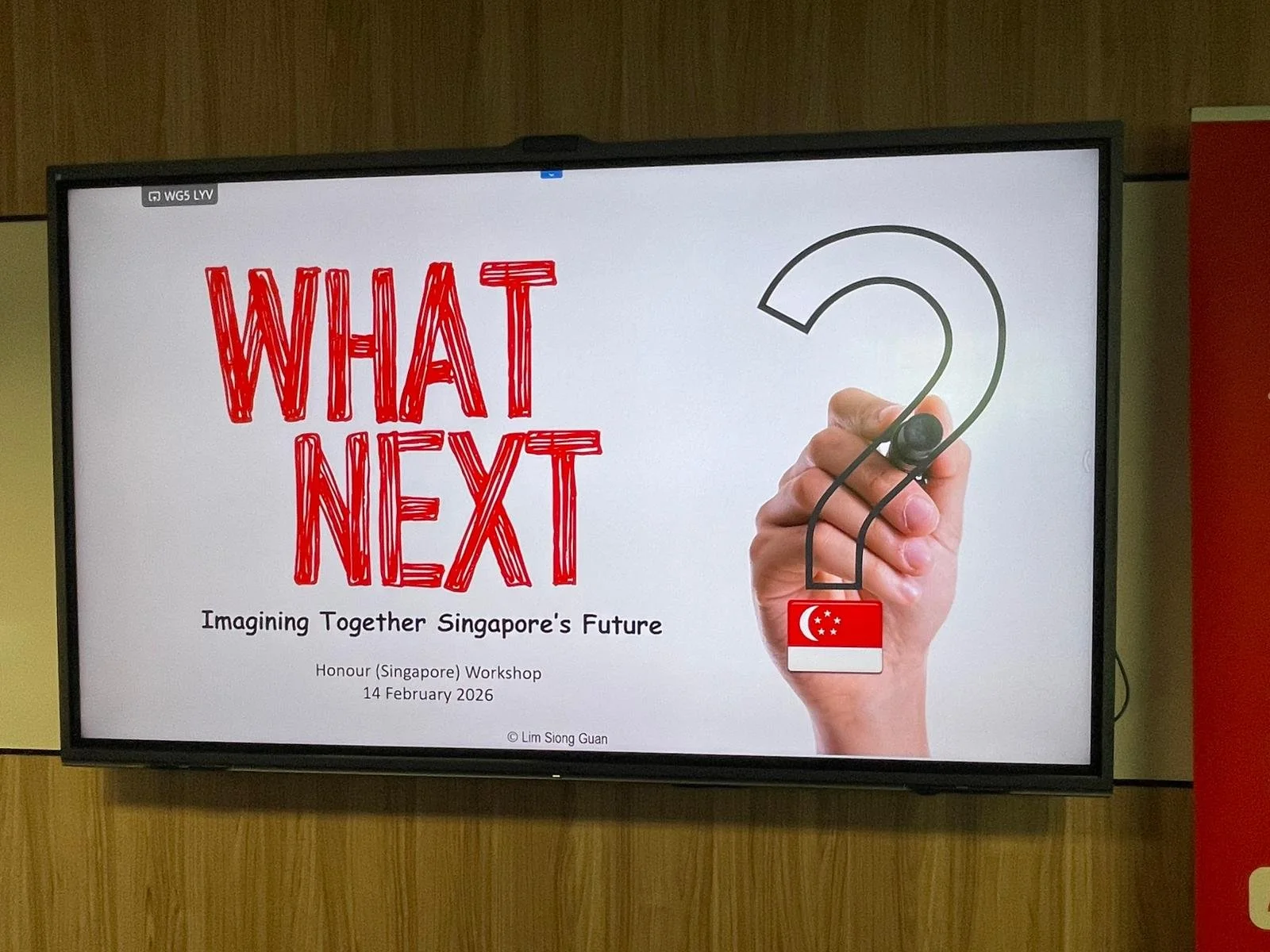
The central question that brought together former MPs, ambassadors, entrepreneurs, and mid-career leaders: What does a successful Singapore look like in 30 years?
Why I Spent Valentine’s Day Imagining Singapore’s Collapse
My wife and I skipped the romantic dinner.
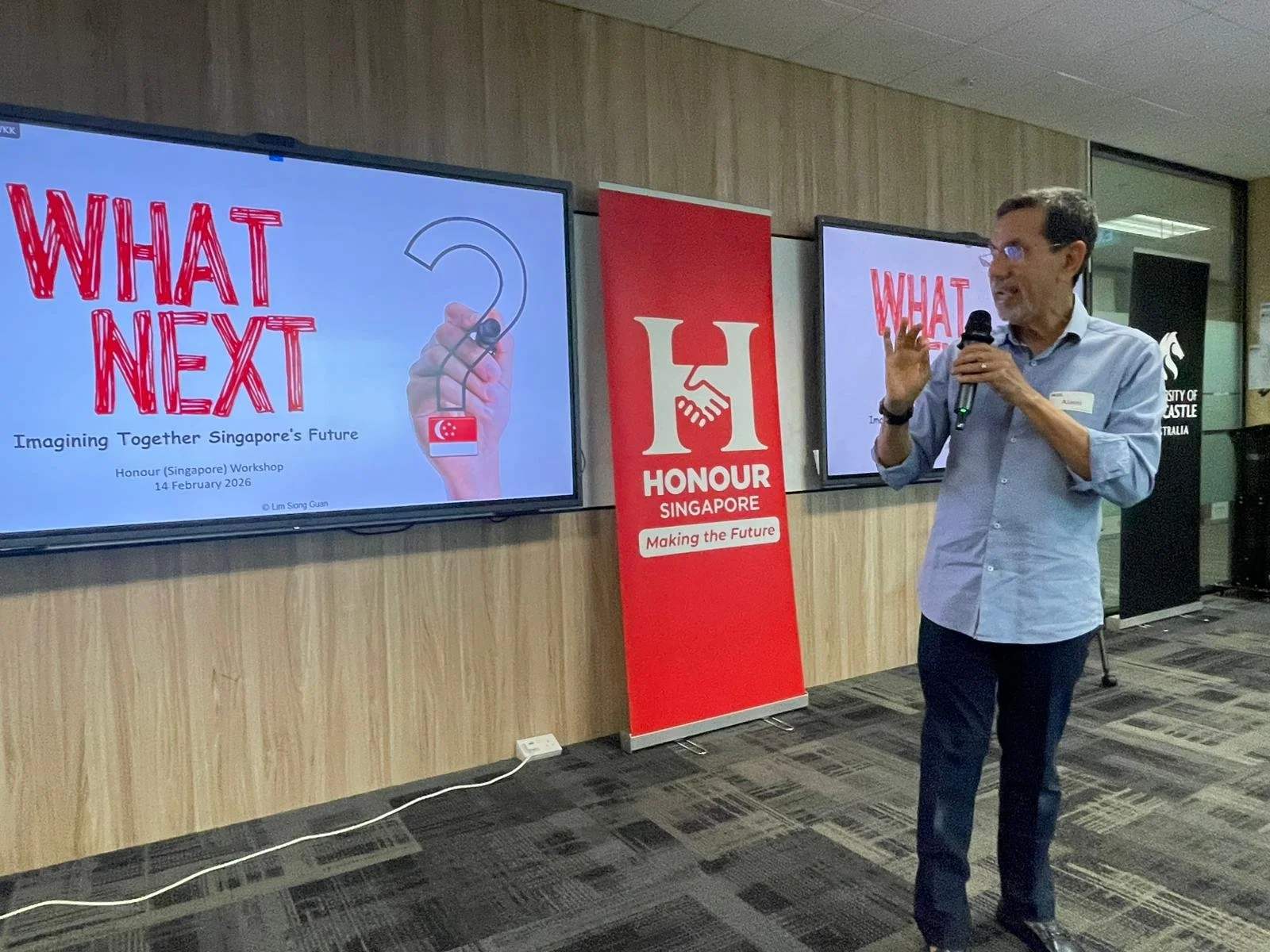
Instead, we sat in a workshop called “What Next? Imagining Together Singapore’s Future”, run by Honour Singapore. The facilitator was Mr. Lim Siong Guan — the man Lee Kuan Yew trusted as his first Permanent Secretary.
His colleagues call him the “Yoda of civil service.” After reading his book “Can Singapore Fall?”, I understood why. He thinks like Charlie Munger, except his domain is nation-building instead of capital allocation.
Then I read his daughter’s tribute, “The Best Is Yet to Be Written” — a full biography written by a daughter who looks up to her father. That told me everything about how he lived.
I needed to learn from him directly.
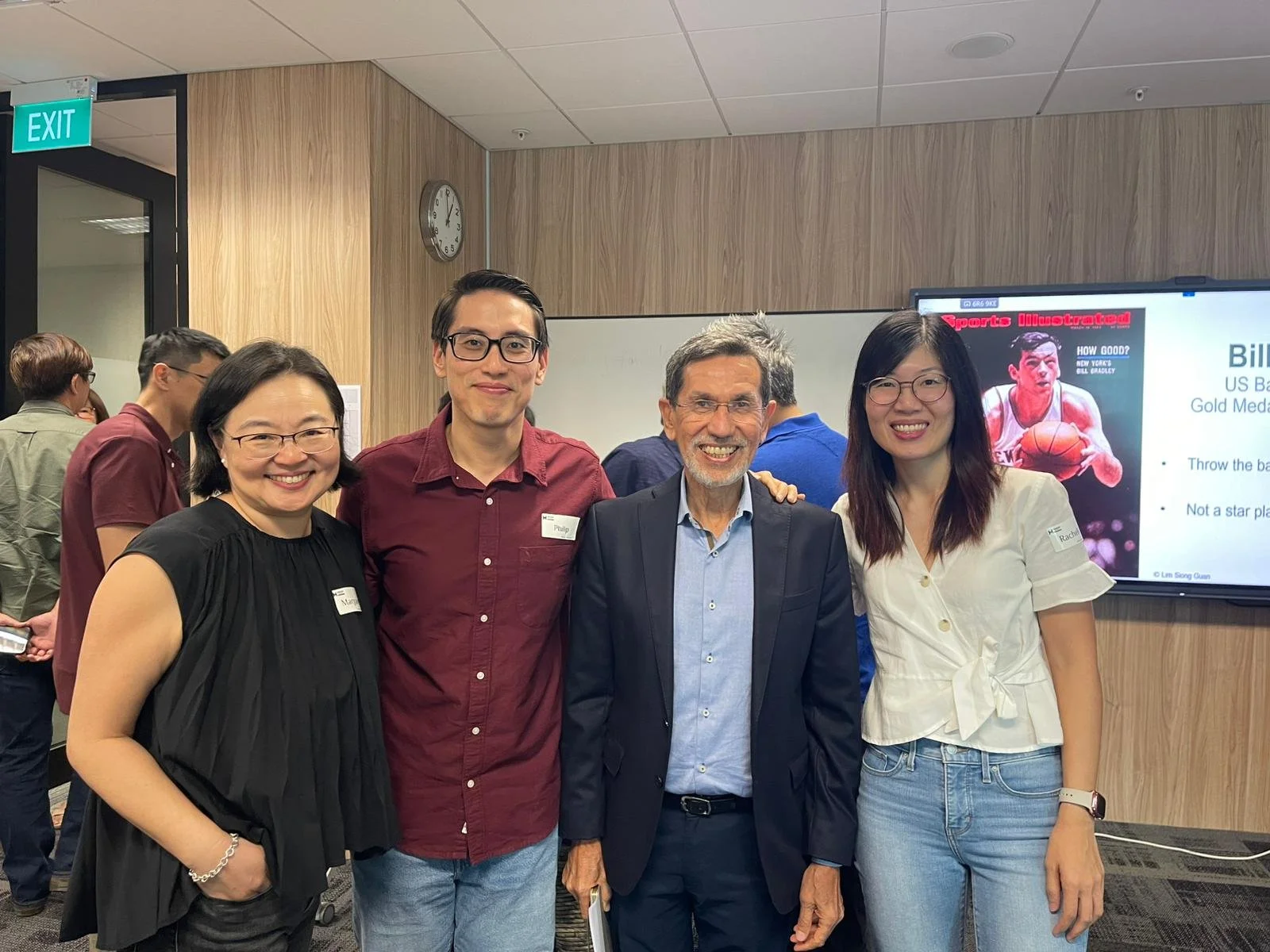
Our table: a former MP, former Ambassador, board members, and banking leaders. All wrestling with the same question from different angles.
At our table:
A former Ambassador to Algeria
A former Member of the Parliament
A board member of Honour Singapore
An HR executive
My wife and me
We represented leaders at 40 — mid-career professionals asking: how do we build institutions that outlast us?
Singapore is 60 years old. In the lifecycle of nations, barely out of adolescence. History suggests we have 190 years left before the clock runs out.
The question is whether we beat the pattern.
The 250-Year Clock: Every Empire Dies on Schedule
Mr. Lim opened with a fact that should terrify every leader.
Sir John Bagot Glubb, a British military historian, studied the rise and fall of empires. He found a pattern that held across centuries, continents, and cultures.
Every empire rises and falls within 250 years. Roughly 10 generations.
Despite technology. Despite geography. Despite wealth.
The pattern is ruthless. Rome. Ottomans. British. All followed the same arc.
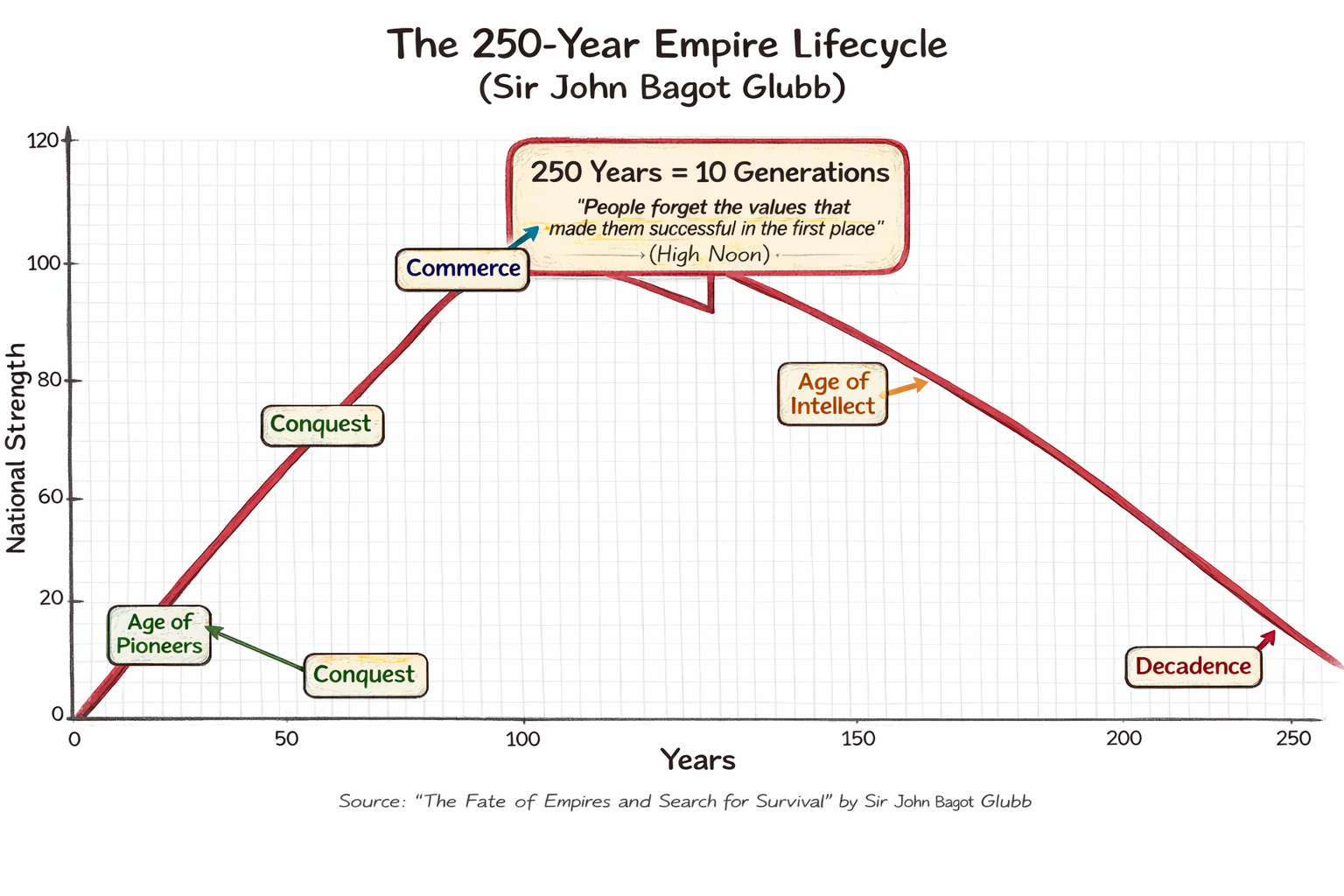
The lifecycle:
Age of Pioneers → Conquest → Commerce → Affluence (The Peak)
Age of Intellect → Decadence → Decline
The turning point? Affluence.
Once comfortable, nations stop dreaming. They fund arts and intellectual pursuits instead of building. Then comes decadence.
Signs of decadence:
Defensiveness
Pessimism
Materialism
Rejection of new ideas
Influx of foreigners who don’t believe in the future
Mr. Lim cited David Brooks. Brooks called America’s curse “non-judgmentalism” — the erosion of shared values that once held society together.
When people believe nothing is worth saving, decline is inevitable.
Singapore is in the Age of Affluence right now.
The question: can we engineer a new ascent while slowing our decline?
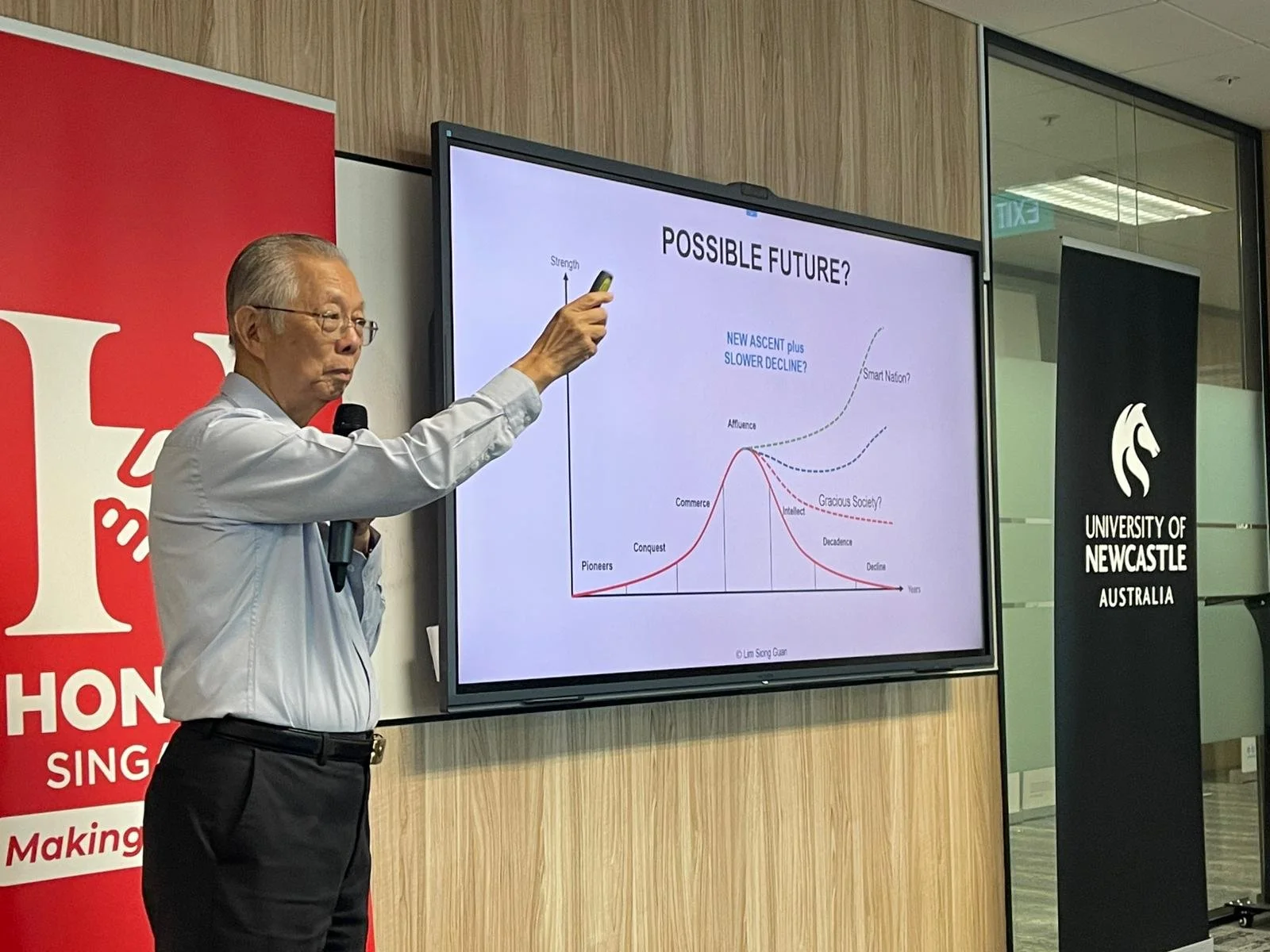
Singapore at a crossroads. New Ascent (Smart Nation) or historical pattern (Intellect → Decadence)
Three Ways to Lead. Only One Works in Chaos.
Mr. Lim gave us three metaphors for leadership. Then he told us which one we need.
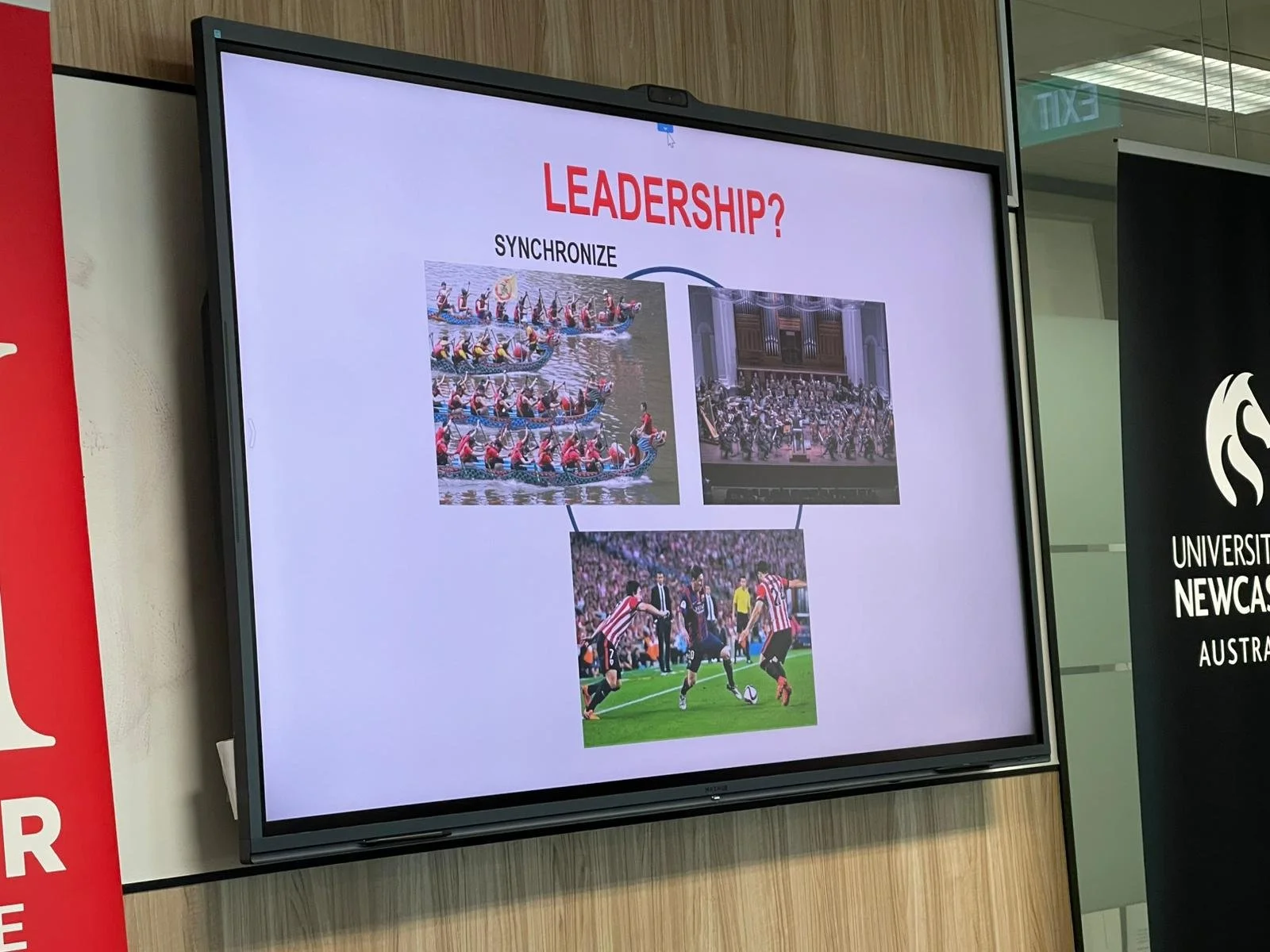
Dragon Boat: Synchronization
Everyone follows the drummer. The leader dictates the rhythm.
This works when the path is clear and everyone agrees on direction.
Orchestra: Harmonization
The conductor harmonizes tempo. The music creates beauty.
The leader coordinates. Doesn’t control every note.
Soccer: Enablement
You cannot tell people exactly what to do. You’re part of the action.
You must anticipate second-order effects. You must enable people to make good decisions in real-time.
Mr. Lim’s stance: Soccer is the only model for leading in uncertainty.
You don’t dictate. You don’t harmonize. You enable.
You give people the confidence and capability to respond to what you cannot predict.
Sitting there, I realized: this is how I need to lead my family.
Not as a drummer. Not as a conductor. As a coach who empowers them to navigate an unpredictable world.
Why Rich Countries Stay Miserable
Mr. Lim introduced us to David Halpern’s paradox.
Richer countries are happier. True.
But economic growth alone doesn’t increase happiness. Also true.
The paradox breaks leaders’ brains. We grow GDP. We raise incomes. People stay miserable.
Why?
Inequality destroys trust faster than wealth builds it.
When some grow faster than others, envy corrodes everything. You see your neighbor get rich while you stay flat. Resentment builds.
Halpern’s answer: The hidden wealth of nations is the extent to which citizens get along.
Singapore’s real advantage isn’t technology or policy. It’s social cohesion.
Culture as Competitive Advantage
This is why Honour Singapore exists. To foster a culture of honor. To build a nation where citizens trust each other and their leaders.
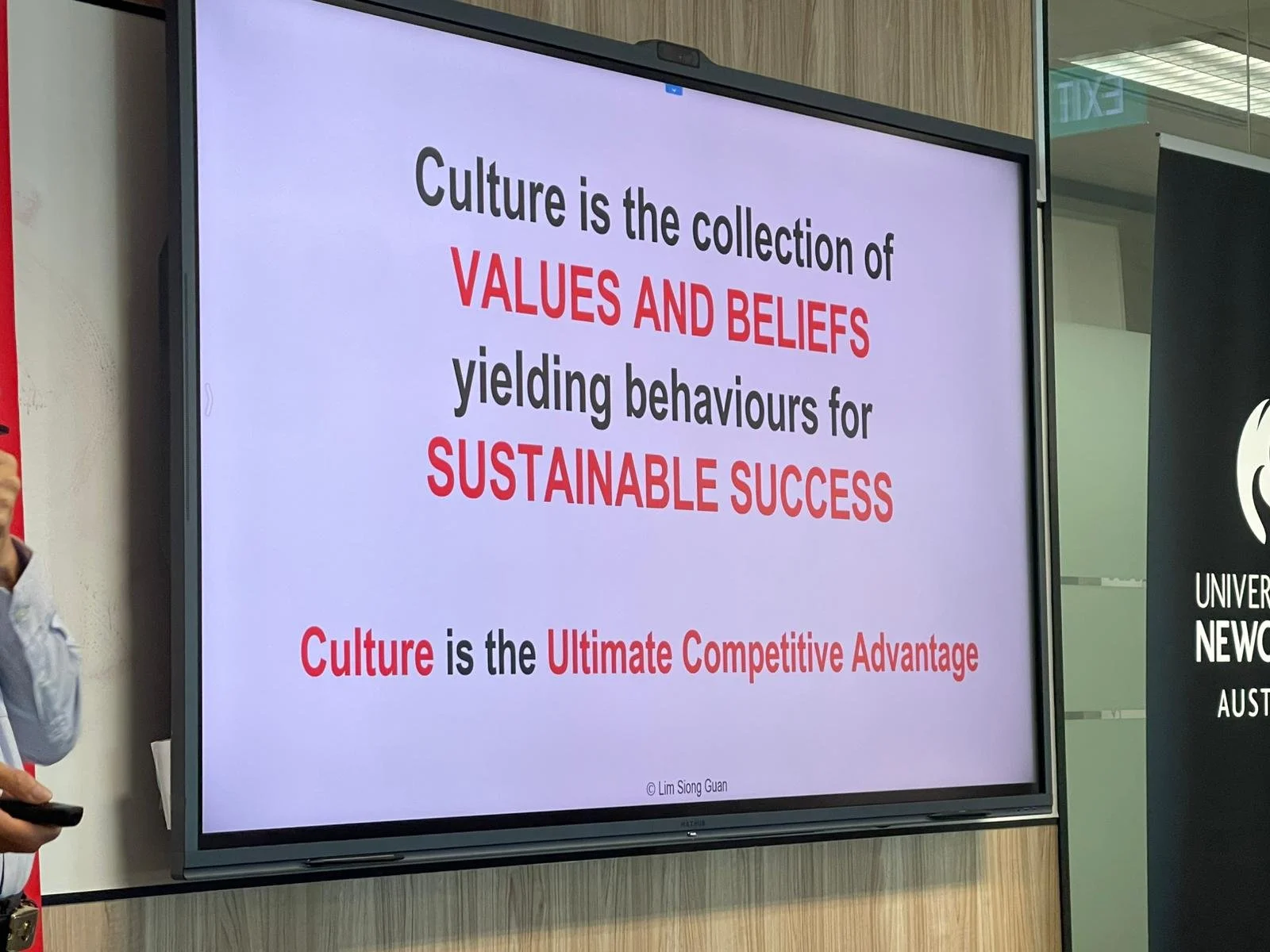
Culture isn’t soft. It’s the collection of values and beliefs that yield behaviors for sustainable success. Everything else can be copied.
The Framework That Beats Unknown Unknowns
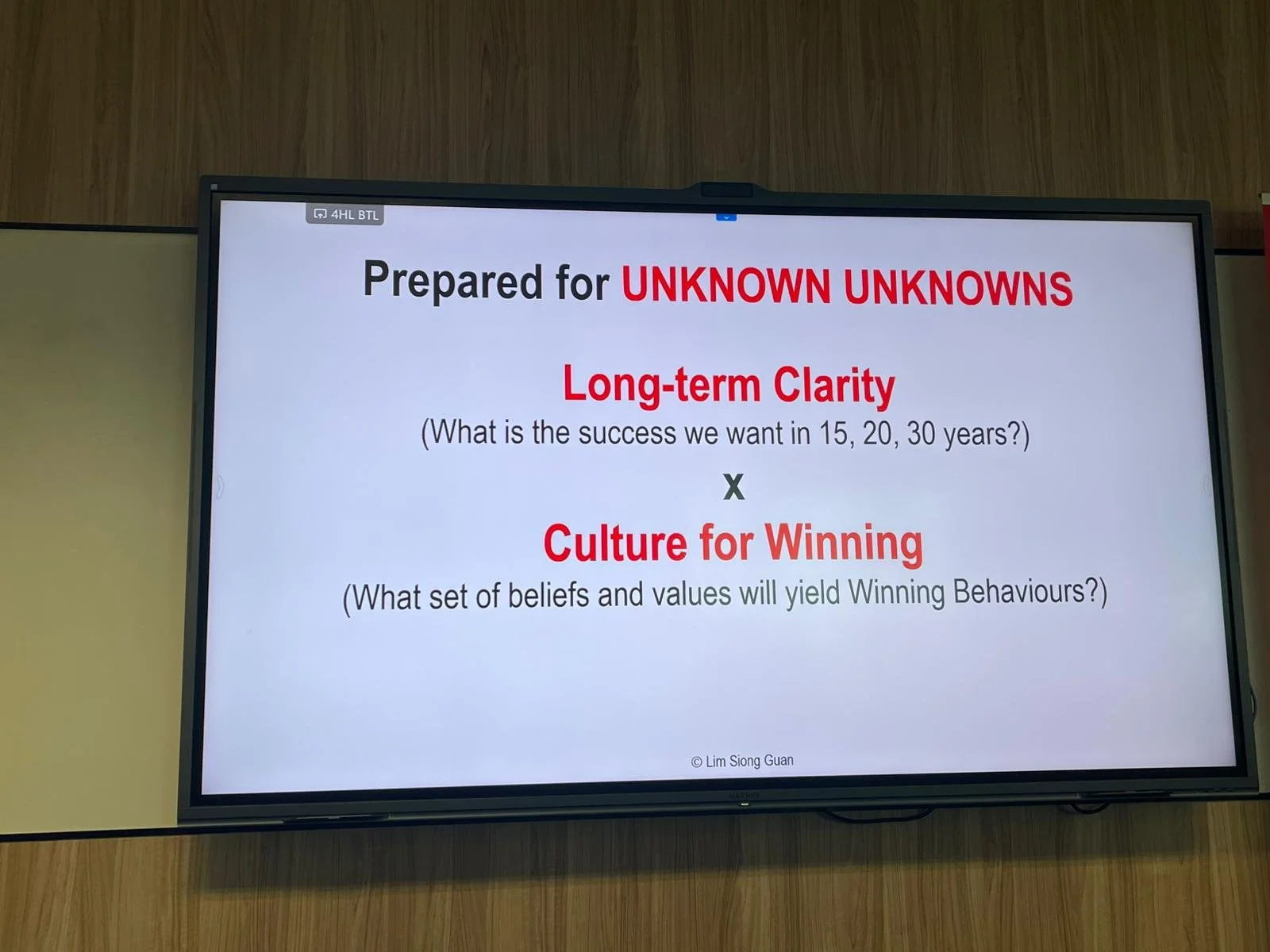
How do you prepare for what you cannot see?
Long-Term Clarity × Culture for Winning = Survival
Long-Term Clarity: What is the success we want in 15, 20, 30 years?
Culture for Winning: What set of beliefs and values will yield winning behaviors?
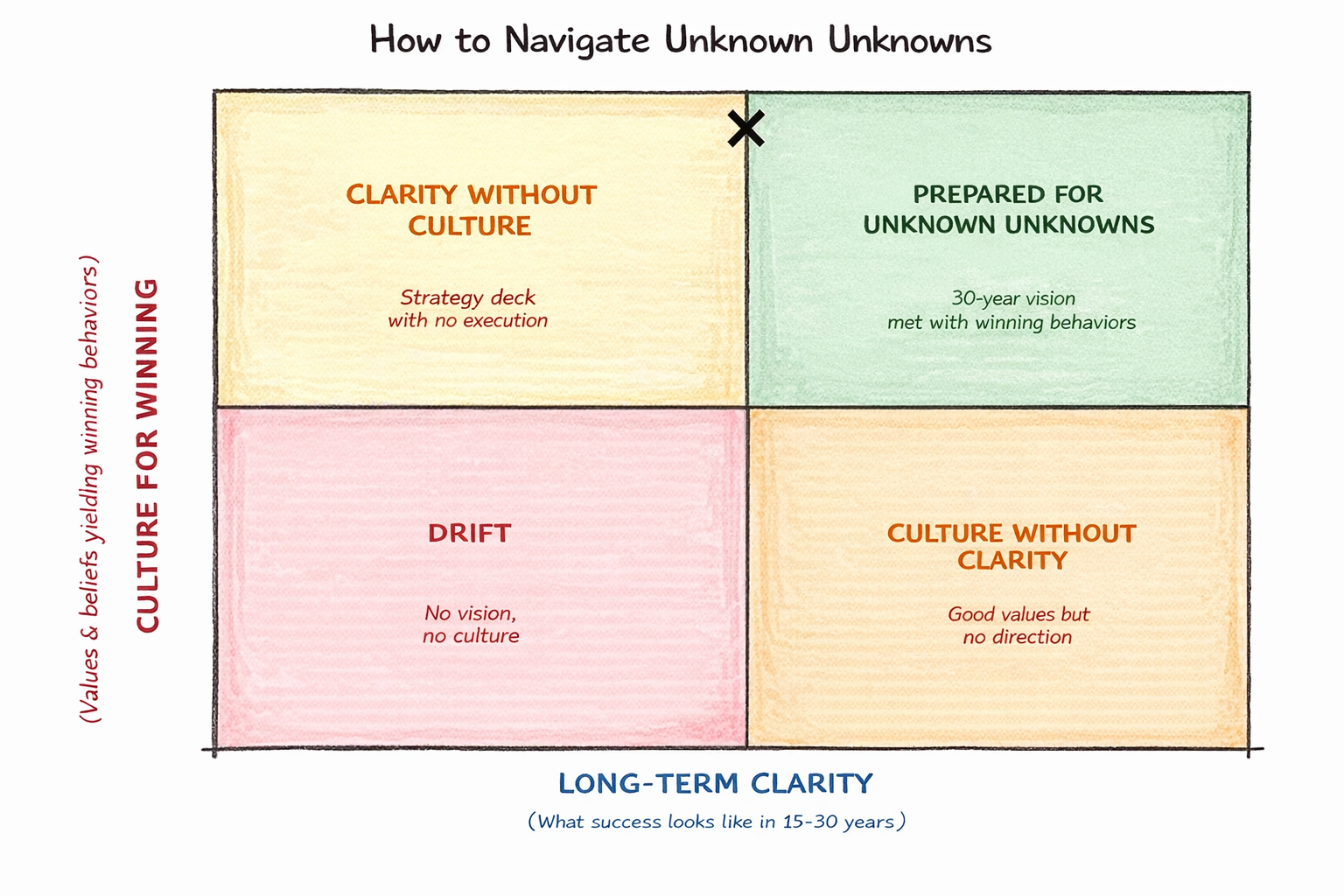
Clarity without culture is just powerpoint slides. It looks good on paper but nobody will follow.
Culture without clarity on the other hand are good values but with no direction. Energy dissipates. You achieve something but not your full potential.
Worse — without clarity nor culture — you will be drifting.
Framework for Different Worlds
In the world of known-known, you have to be decisive.
In the world of known-unknown, you have to be resilient.
In the world of unknown-known, you have to be responsive.
In the world of unknown-unknown, you have to have a winning culture.
Most leaders plan for known risks. Market crashes. Regulatory changes. Competitive threats.
Smart leaders plan for unknown risks. Black swans. Paradigm shifts. Technology disruption.
The best leaders build culture that thrives when everything they planned for becomes irrelevant.
Clarity of destination + Culture that enables adaptation = You survive what kills your competitors
When you have absolute clarity on purpose and direction, every challenge becomes tactical.
Markets shift? Tactical adjustment.
Technologies disrupt? Tactical adjustment.
Competitors emerge? Tactical adjustment.
Without clarity, every shift feels existential. You panic. You pivot. You die
Copy and Improve Is Dead
For 30–40 years, Lee Kuan Yew’s strategy was simple: copy countries that were 30–40 years ahead.
Find what works. Copy it. Improve it. Repeat.
That worked when the world moved slowly.
Today? The leader in AI is 3–6 months ahead. Sometimes less.
You can’t benchmark your way to safety anymore.
Mr. Lim was blunt: “If you are not thinking about building culture for sustainability and survivability, you are not leading.”
This hit me hard.
In banking, we obsess over quarterly results. We benchmark against peers. We optimize for short-term performance.
We’re not building. We’re managing decline.
The question isn’t “Are we building for 30 years?”
The question is “Are we creating culture that will outlast us?”
Most leaders can’t answer that. I couldn’t either.
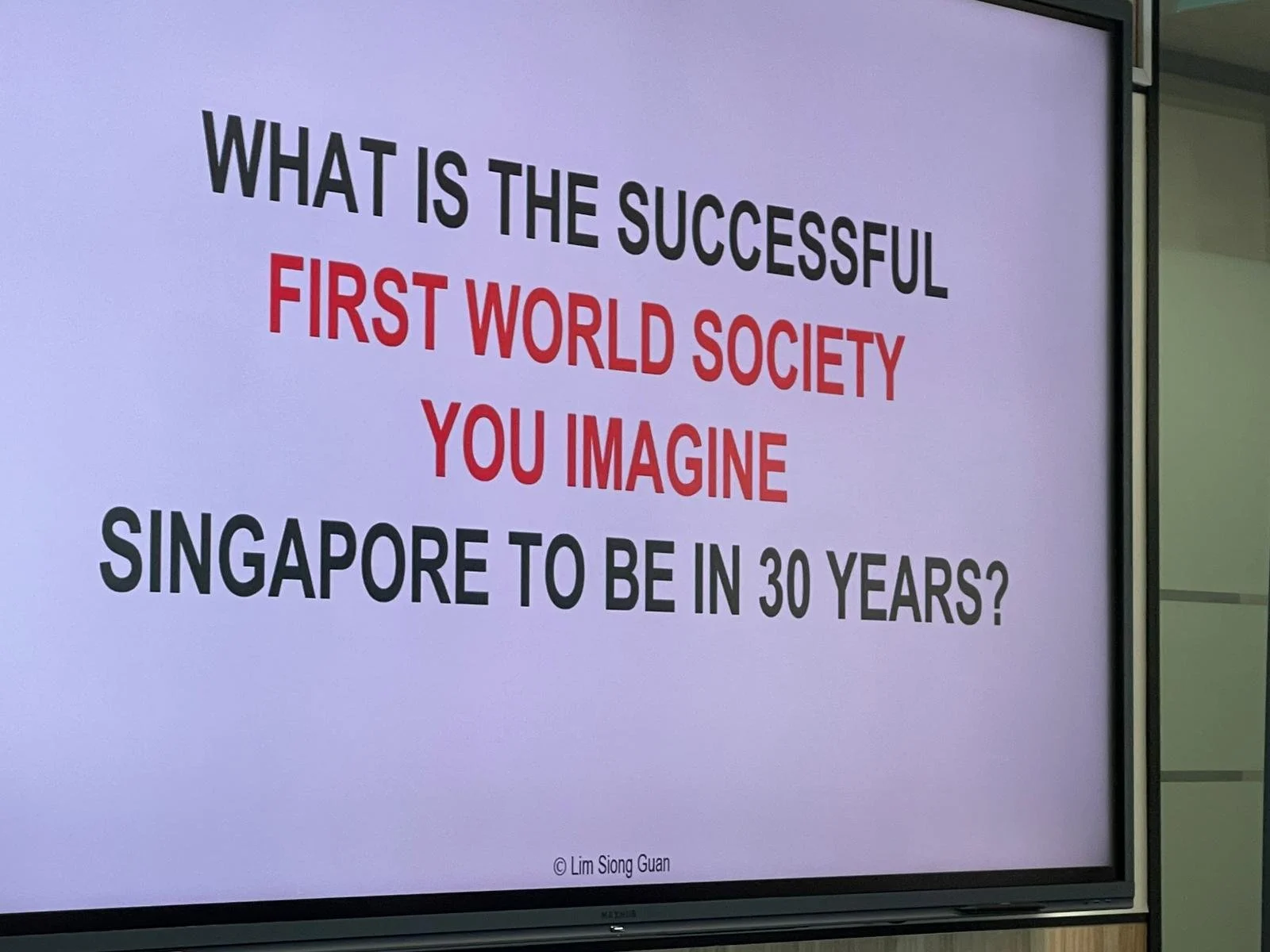
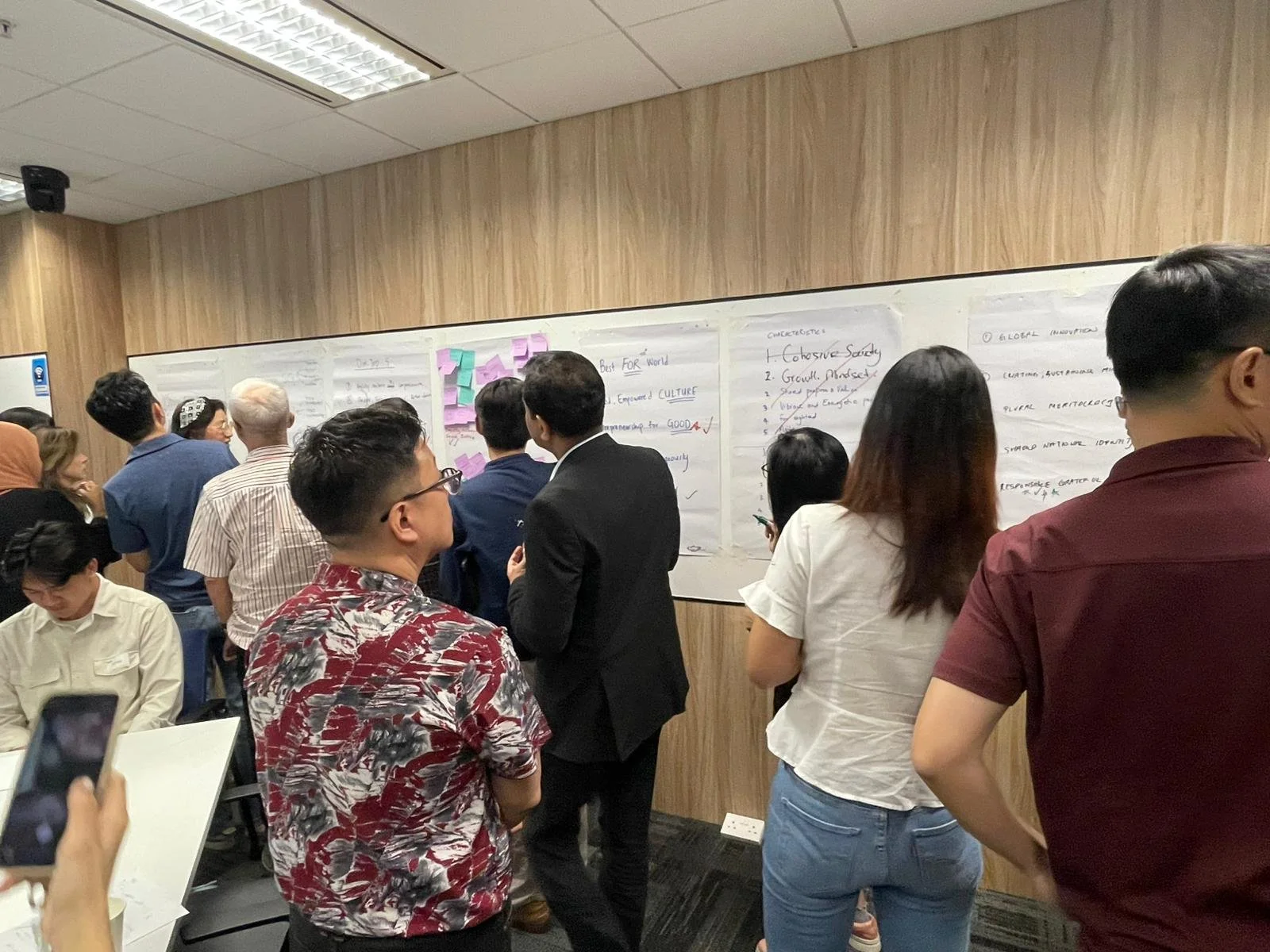
What Our Cohort Wants
Across different groups, five themes emerged:
Strong family as foundation
Failing upwards courageously / Antifragile
Globally active citizens
Entrepreneurship for good
Purpose-driven, diverse, and inclusive
In our breakout session, I proposed “Antifragile Nation” — a nation that doesn’t just survive shocks but grows stronger from them.
My group loved it. We voted it second most popular.
Then it got subsumed into “Fail courageously upwards” in the final tally. Even though it had more votes.
Democracy is frustrating sometimes :)
What This Means for Me: Dream Bigger, Start Building
I’m 40. Mid-career by conventional metrics. Mid-life by biological clock.
I want to dream bigger.
I’m building for 30 years now. Not 30 days.
The work ahead isn’t just professional. It’s personal.
Questions I’m asking myself:
On capital allocation:
How do I shift from quarterly thinking to generational capital allocation?
On teams:
How do I build teams that are antifragile, not just resilient?
On family:
How do I enable my children to navigate unknown unknowns?
On honor:
How do I honor the people around me — my family, colleagues, country?
Mr. Lim explained trust requires three things:
Good Heart: The leader cares about me
Good Head: The leader knows what to do
Good Hands: The leader does what they say
This is my new leadership compass.
Most leaders have good heads. They’re smart. They know strategy.
Some have good hands. They execute.
Few have good hearts. They care about people beyond their utility.
I’m committing to all three.
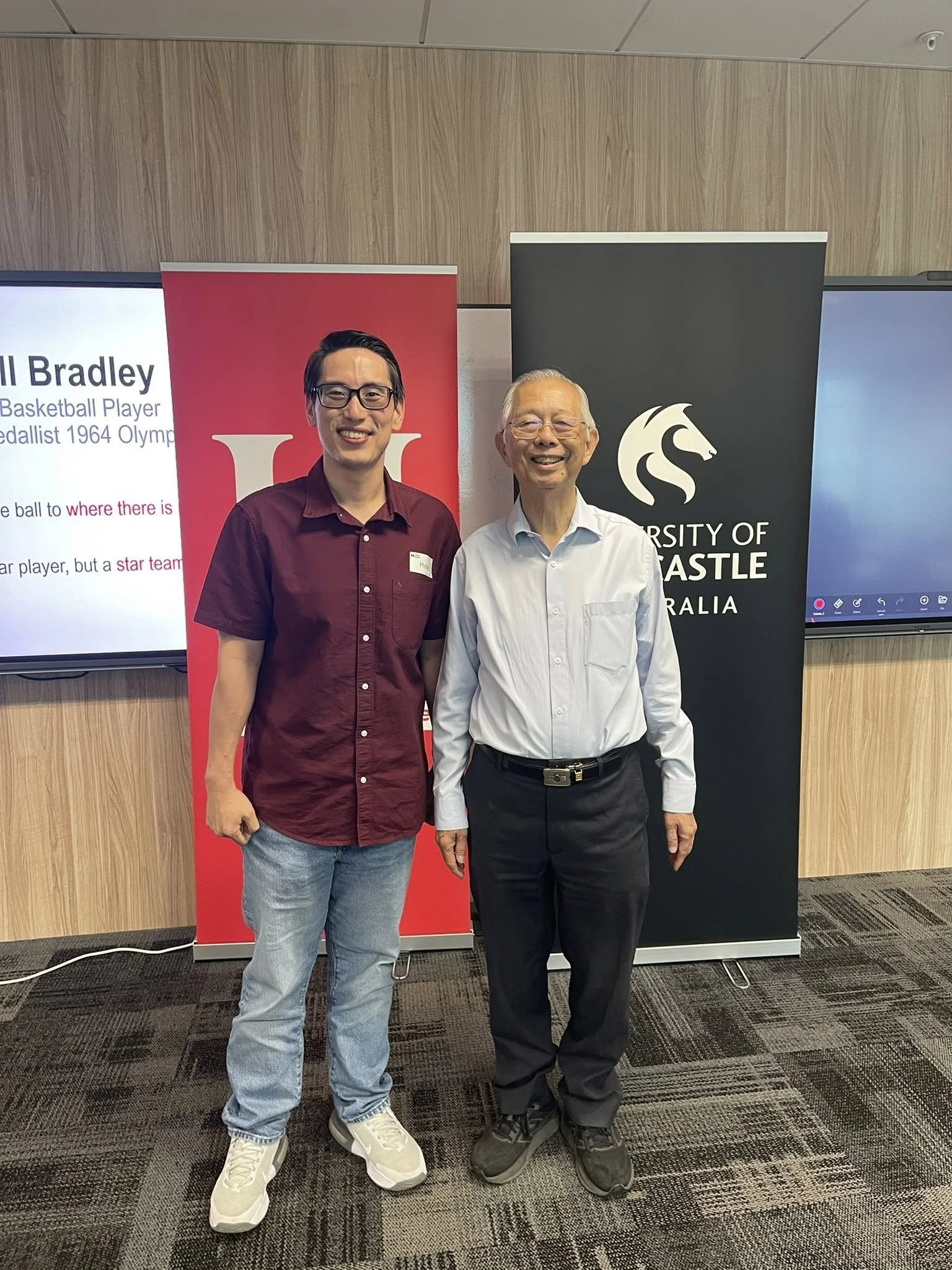
With Mr. Lim Siong Guan. His frameworks on long-term clarity and culture have fundamentally reshaped how I think about leadership.
The Only Metric That Matters
Mr. Lim’s legacy isn’t his decades in public service. It isn’t his role in building Singapore’s sovereign wealth. It isn’t his influence on national strategy.
His real legacy is this:
His daughter spent years writing a full biography about him. Not because he asked. Because she adores him.
That’s success.
Not titles. Not wealth. Not recognition.
A life lived with such integrity, wisdom, and love that your children want to document it for the world.
As I think about the next 30 years, that’s the metric that matters most.
Will my children want to tell my story?
Or will they want to forget it?
Three Questions for Leaders
Take these with you:
1. What is the success you want in 15, 20, 30 years?
Not for your organization. For your life.
2. What culture are you building today that will yield winning behaviors tomorrow?
3. Are you leading like a drummer, a conductor, or a soccer coach?
The empire clock is ticking. We have 190 years left. If we’re lucky.
Let’s not waste them on quarterly thinking.
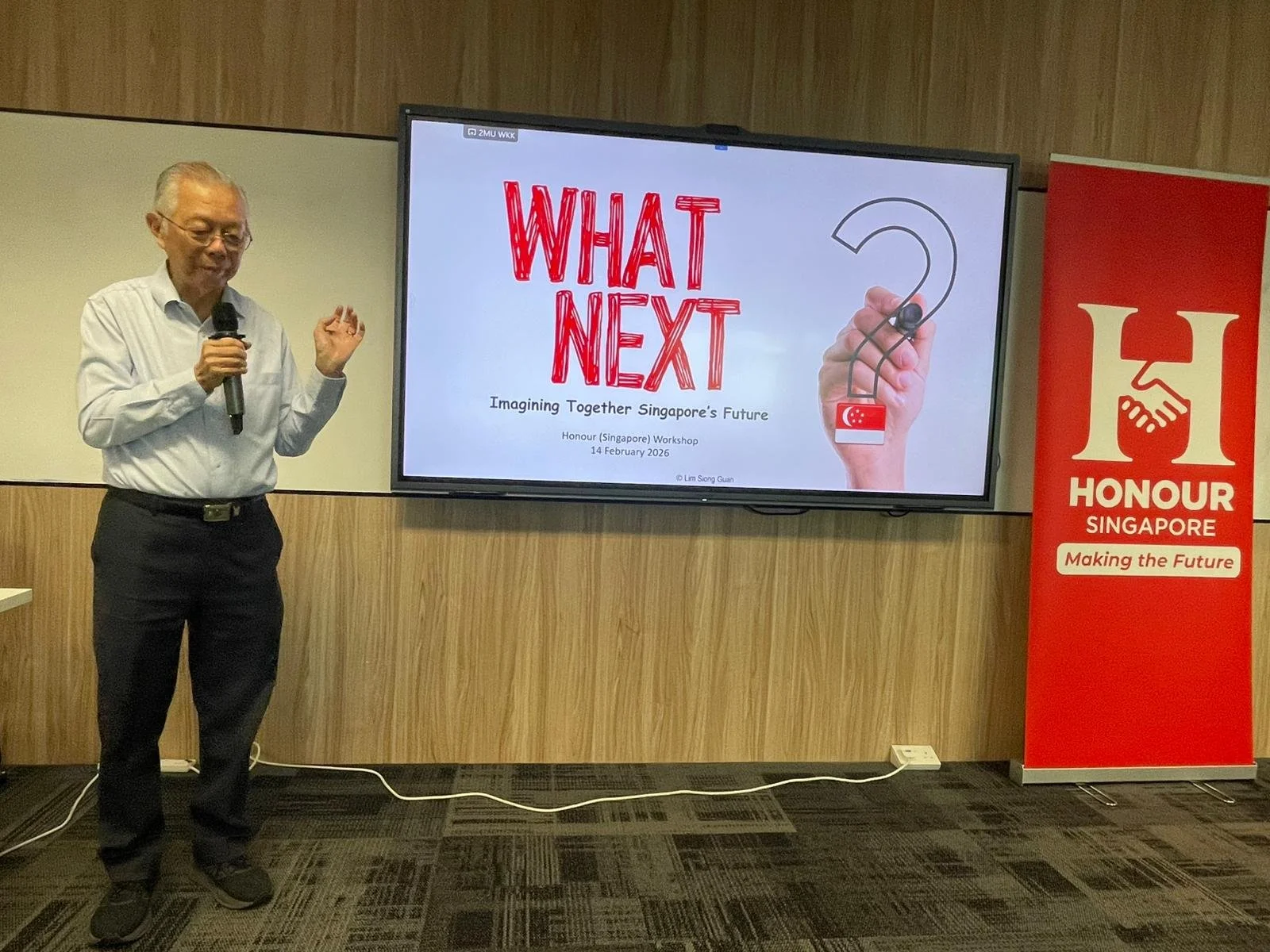
“If you are not thinking about building culture for sustainability and survivability, you are not leading.” — Lim Siong Guan
About Honour Singapore
Honour (Singapore) is a non-profit organization founded to:
Foster a culture of honor
Contribute to ensuring Singapore’s existence as a sovereign nation
Make the future — imagining Singapore 30 years forward
A Final Word
Special thanks to my wife for spending Valentine’s Day with me at this workshop.
And to Mr. Lim Siong Guan, for showing us what it means to build for generations. To his daughter Joanne Lim for introducing Honour Singapore to me.
At 40, I am dreaming new dreams.
I’m building institutions that outlast me.
I’m thinking of taking my firm to the next level.
I’m creating culture that my children will want to preserve.
I’m thinking in generations, not quarters.
This is what leadership looks like when you stop climbing and start building.
The empire clock is ticking.
Looking forward for my next 30 years.